
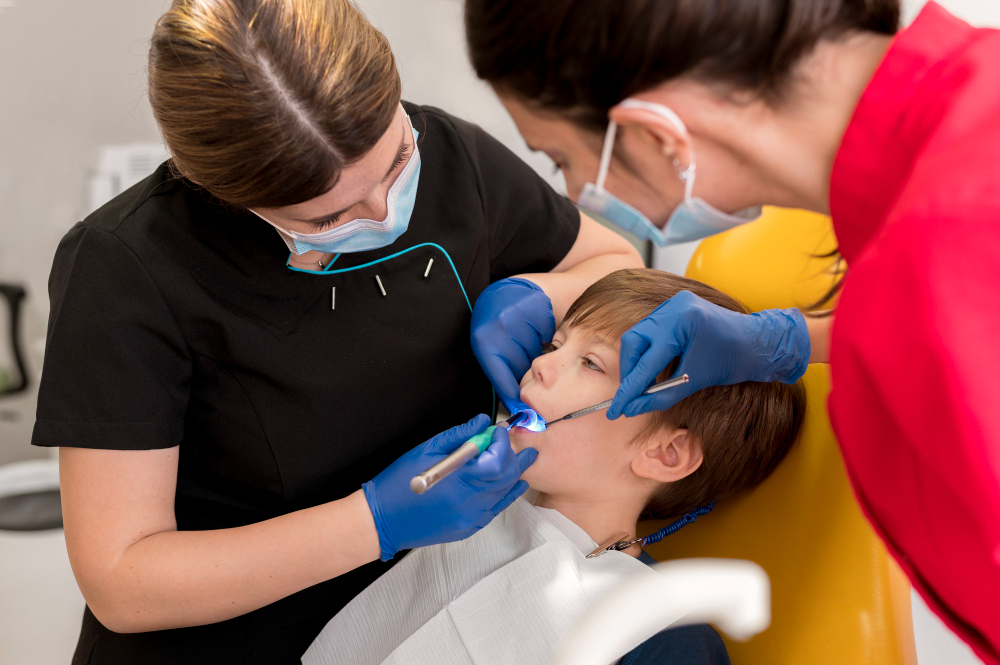
Space maintainers are special dental devices used in children’s dental care. They help keep the space open when a child loses a baby tooth early. When are space maintainers needed? Often, they are needed after early tooth loss to prevent dental crowding. These devices guide adult teeth into the right place. As a parent or caregiver, knowing when space maintainers are needed can help protect your child’s smile.
What Are Space Maintainers?
Space maintainers are small dental tools made of metal or plastic. Dentists place them in a child’s mouth to hold the space left by a lost baby tooth. This space is important because it guides the new adult tooth into the right spot. Without a space maintainer, nearby teeth may move into the gap. As a result, adult teeth may not have enough room to grow in straight.
Why and When Are Space Maintainers Needed?
Sometimes, children lose baby teeth before the adult teeth are ready to come in. This can happen because of injury, decay, or other dental problems. When this happens, space maintainers are needed to keep the gap open. Otherwise, other teeth may shift and cause crowding or crooked teeth. For example, if a child loses a back tooth early, the dentist may suggest a space maintainer. This helps prevent future dental issues and supports healthy growth.
Common Causes for Needing Space Maintainers
There are several reasons why a child might need a space maintainer. Some common causes include:
For instance, if your child loses a tooth while playing sports, a space maintainer may be needed. This simple device can help prevent dental crowding and future orthodontic problems.
How Dentists Diagnose the Need for Space Maintainers
Dentists use several steps to decide if a child needs a space maintainer. First, they check the mouth and teeth during a dental exam. Next, they may take X-rays to see how the adult teeth are growing. If a gap is likely to cause problems, the dentist will talk with you about using a space maintainer. In many cases, early action can prevent bigger issues later. According to the American Dental Association (ADA), regular dental visits help catch these problems early.
Types of Space Maintainers
There are different types of space maintainers. Dentists choose the best one based on your child’s needs. The main types include:
For example, a band-and-loop maintainer is often used for single missing teeth. On the other hand, a lingual arch may be used if several teeth are missing.
Benefits and Risks
Space maintainers offer many benefits. They help prevent dental crowding and guide adult teeth into the right place. This can reduce the need for braces later. However, there are some risks. Sometimes, space maintainers can break or cause gum irritation. With good care and regular dental visits, most problems can be avoided. The Centers for Disease Control and Prevention (CDC) also notes that early dental care supports long-term oral health.
Care and Maintenance Tips
Proper care is important for space maintainers. Here are some tips:
With these steps, your child’s space maintainer can work well until it is no longer needed.
Prevention and Early Dental Care
Preventing early tooth loss is the best way to avoid needing space maintainers. Encourage your child to brush twice a day and floss daily. In addition, regular dental check-ups help spot problems early. Dentists can give advice on healthy eating and good habits. For example, wearing a mouthguard during sports can protect teeth from injury. Early care supports a healthy smile and reduces the risk of dental crowding.
In summary, space maintainers play a key role in children’s dental care. If your child loses a baby tooth early, talk to your dentist. Consult a pediatric dentist at MAARK Dental Specialties for personalized advice about space maintainers for your child.